Choosing the right material is one of the most decisive factors in creating a flawless prom look, especially when working with a bold color like orange. The topic of Top Fabrics for Orange Prom Dresses is not simply about aesthetics, but about how fabric directly influences comfort, movement, silhouette definition, and even how the dress appears under different lighting conditions. Orange is a high-impact color that enhances every texture detail, which means the wrong fabric choice can easily shift a dress from elegant to overwhelming.
Unlike neutral-toned gowns, orange prom dresses do not hide structural imperfections. Instead, they highlight them. A satin finish can intensify curves and reflect light dramatically, while chiffon can soften the entire silhouette and create fluid motion. This makes fabric selection a technical decision rather than a purely visual one. Understanding fabric behavior is essential for achieving both elegance and comfort throughout prom night.
EmberGlow approaches prom fashion with a design-first philosophy, where every fabric is evaluated based on movement performance, breathability, and silhouette compatibility. This guide explores the most important materials used in prom fashion and explains how they contribute to both comfort and elegance in orange prom dresses, helping you make a confident and informed styling decision.
Why Fabric Choice Matters in Orange Prom Dresses
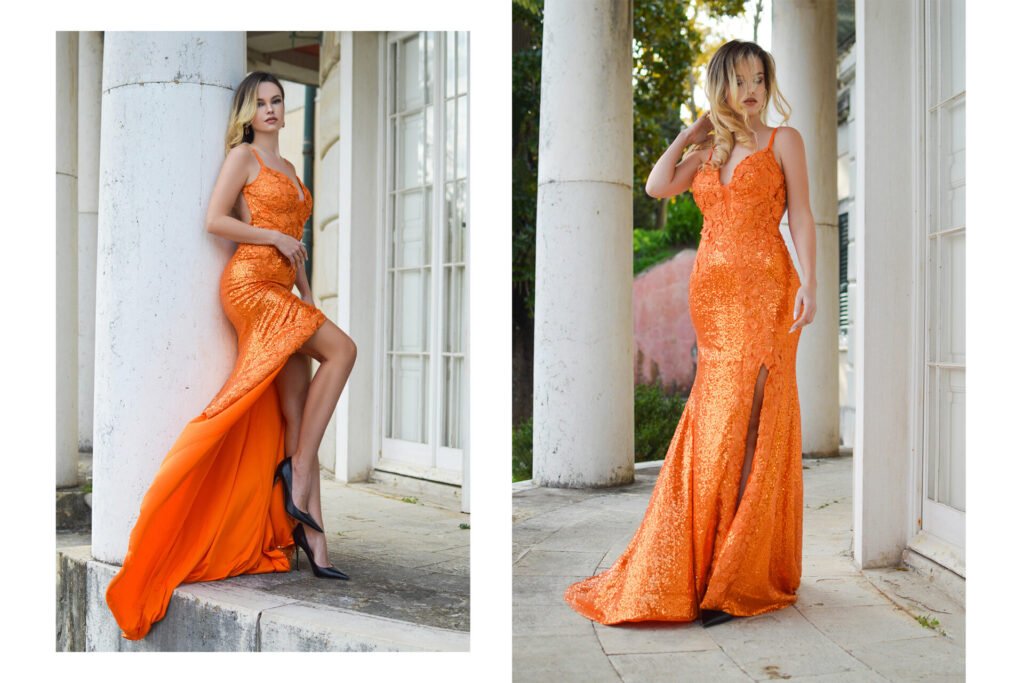
The importance of fabric selection becomes significantly more pronounced when working with orange prom dresses due to the way this color interacts with visual perception. In Top Fabrics for Orange Prom Dresses, fabric is not just a background material but a defining structural element that shapes the entire aesthetic outcome of the dress.
Orange has a natural tendency to amplify surface detail. This means that textures, folds, seams, and draping behavior are more visible compared to darker or muted tones. As a result, fabric quality and composition directly influence how polished the final look appears. A high-quality fabric will create smooth transitions and controlled structure, while a poor fabric choice may result in uneven draping or unwanted volume distortion.
From a fashion engineering perspective, fabric determines four key performance areas: silhouette control, movement flow, comfort level, and visual reflection. Silhouette control refers to how well the fabric maintains shape under gravity and motion. Movement flow describes how the dress behaves while walking or dancing. Comfort level relates to breathability and weight distribution. Visual reflection determines how light interacts with the fabric surface in photography and real-life lighting conditions.
For example, satin reflects light strongly, which enhances luxury perception but also exposes any tension or tightness in fit. Chiffon absorbs light softly, creating a romantic and airy effect, but requires layering for structure. Crepe offers balanced control, making it suitable for modern minimal designs, while tulle introduces volume but must be carefully constructed to avoid excessive bulk.
In real prom environments, where lighting changes constantly and movement is continuous, fabric behavior becomes even more important. A dress that looks perfect in static photography may behave differently on the dance floor. This is why professional stylists prioritize fabric intelligence alongside silhouette selection.
Understanding fabric choice is therefore not a surface-level decision but a structural foundation for achieving both comfort and elegance in orange prom dresses.
Top Fabrics for Orange Prom Dresses
Satin Orange Prom Dress – Luxurious Shine & Structured Elegance
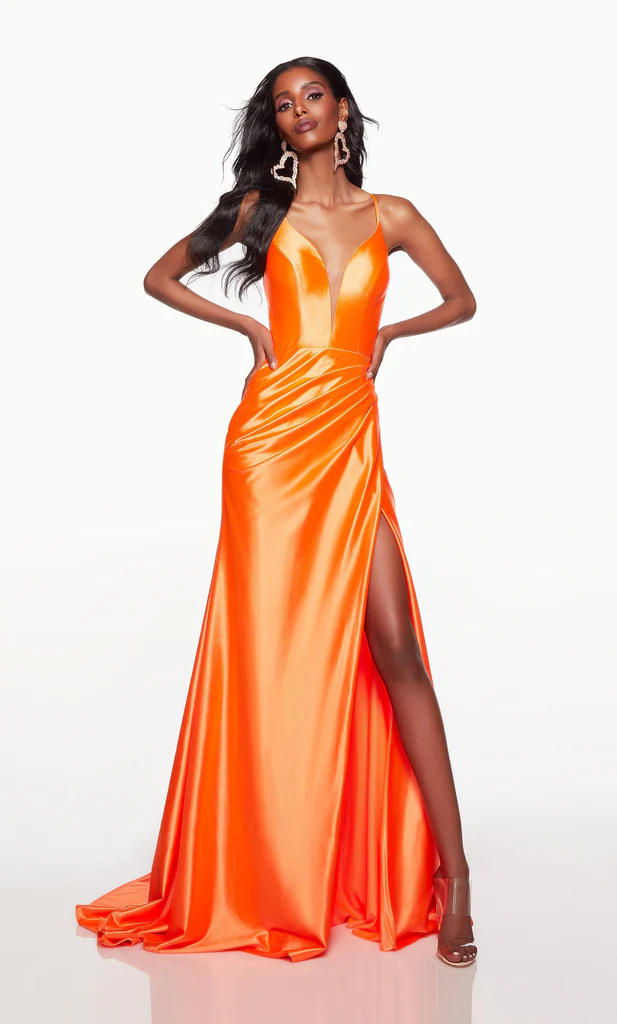
Among all materials used in formalwear, satin remains one of the most iconic choices in Top Fabrics for Orange Prom Dresses due to its signature glossy surface and smooth draping behavior. Satin is often associated with red carpet fashion because it creates a refined, high-impact visual finish that naturally enhances body curves and silhouette definition.
Satin works particularly well in structured silhouettes such as mermaid gowns, fitted bodices, and ball gowns. Its density allows it to hold shape while still maintaining fluid movement, making it a balanced option for formal events. In orange prom dresses, satin intensifies color depth and creates a luminous effect under lighting, which makes photographs appear more vibrant and polished.
From an E-E-A-T perspective, satin is considered a premium fabric because of its ability to deliver consistent visual luxury. However, it requires precise fitting. Because satin reflects light, any tightness or imbalance in construction becomes visible instantly. This is why satin dresses must be tailored accurately to body proportions.
Comfort-wise, satin is less breathable compared to lighter fabrics, but it compensates with structure and elegance. It is ideal for indoor prom settings where temperature is controlled and visual impact is a priority.
Chiffon – Lightweight Flow & Romantic Movement
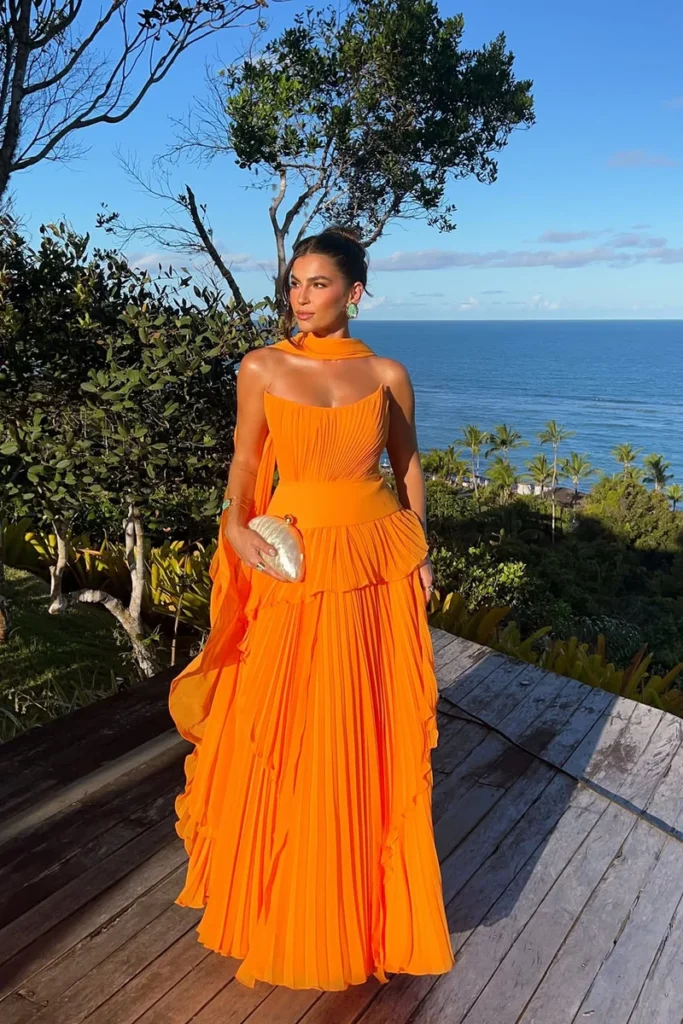
Chiffon is one of the most essential fabrics in Top Fabrics for Orange Prom Dresses, especially for those seeking comfort and fluid elegance. Known for its lightweight and semi-sheer structure, chiffon creates soft movement that enhances the natural flow of the dress.
This fabric is commonly used in A-line gowns, empire waist designs, and layered skirts. Its ability to drape gently over the body makes it highly flattering for multiple body types. Unlike structured fabrics, chiffon does not cling tightly, which enhances comfort during long hours of wear.
One of chiffon’s strongest advantages is breathability. It allows airflow, making it suitable for extended events where movement and dancing are expected. However, chiffon alone lacks structural strength, which is why it is often combined with inner linings or layered construction to maintain shape integrity.
In orange prom dresses, chiffon softens the intensity of the color, creating a romantic and ethereal effect. It reduces visual heaviness and introduces motion-based elegance, especially in outdoor or evening prom settings.
From a stylistic perspective, chiffon is often recommended for individuals who prioritize comfort without sacrificing elegance. It represents balance between practicality and visual softness.
Tulle – Volume, Drama & Princess Silhouette Effect
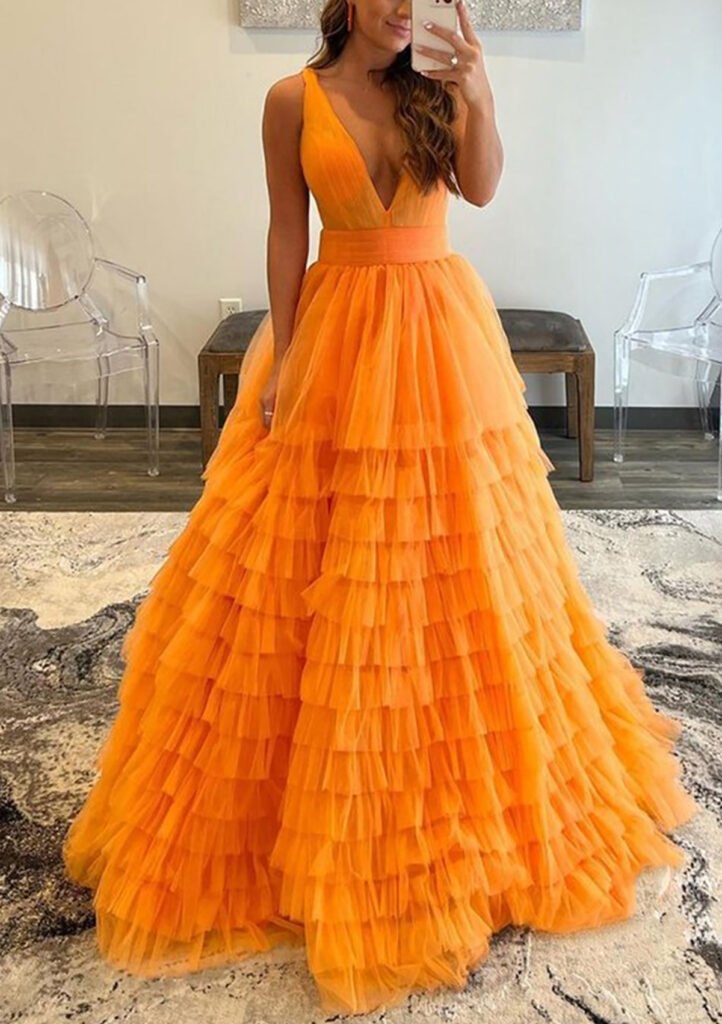
Tulle plays a crucial role in Top Fabrics for Orange Prom Dresses, particularly in designs that aim for dramatic volume and fairy-tale aesthetics. It is a net-like fabric that is lightweight but capable of creating significant structural volume when layered.
Tulle is commonly used in ball gowns and layered skirts, where it forms the foundation of the dress’s silhouette. In orange prom dresses, tulle enhances visual drama by expanding shape without adding weight. This allows the wearer to achieve a bold, princess-inspired look while maintaining mobility.
However, tulle requires careful construction. Without proper layering balance, it can create excessive bulk or stiffness. High-quality prom dresses use structured lining beneath tulle layers to ensure comfort and controlled volume.
From a fashion design standpoint, tulle is not just decorative but architectural. It builds the shape of the dress while allowing creative layering techniques such as gradient volume or asymmetric skirt design.
In photography and movement, tulle creates dynamic visual interest because it responds to motion and airflow. This makes it particularly popular in statement prom dresses designed for visual impact.
Crepe – Modern Minimalism with Structured Flow
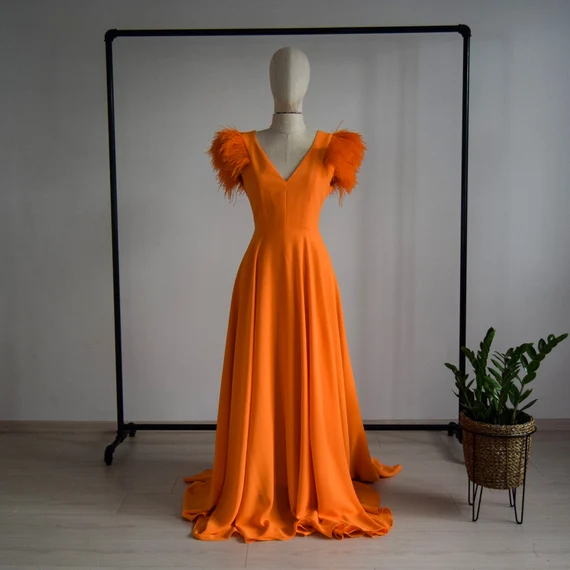
Crepe is one of the most underrated yet powerful materials in Top Fabrics for Orange Prom Dresses, especially for modern prom fashion. It features a slightly textured matte surface that creates a clean and sophisticated appearance.
Unlike satin, crepe does not reflect excessive light, which gives it a more subtle and refined look. It is often used in fitted gowns, column dresses, and contemporary silhouettes that prioritize shape clarity over volume.
One of crepe’s key strengths is its balance between structure and flexibility. It holds shape without feeling rigid, making it suitable for long-wear comfort. It also resists wrinkling better than many delicate fabrics, which enhances practicality during prom events.
In orange prom dresses, crepe delivers a modern aesthetic that feels elegant without being overly dramatic. It is often chosen by individuals who prefer minimal design with strong silhouette definition.
From a professional styling perspective, crepe is considered a high-function fabric because it supports both comfort and structure simultaneously, making it ideal for refined formalwear.
Lace – Texture Depth & Romantic Detailing
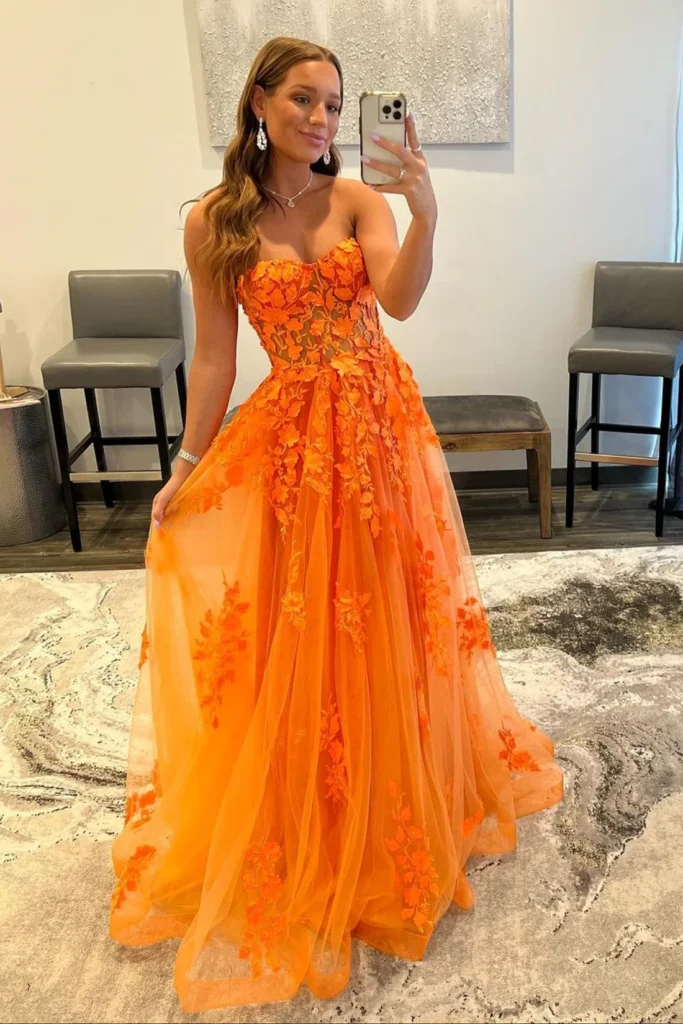
Lace adds a completely different dimension to Top Fabrics for Orange Prom Dresses by introducing texture, depth, and decorative complexity. Unlike base fabrics, lace is typically used as an overlay or accent material rather than the primary structural layer.
It is commonly applied to bodices, sleeves, and skirt overlays to create visual contrast. In orange prom dresses, lace softens bold color intensity and adds a romantic or vintage-inspired aesthetic.
Lace also enhances perceived luxury because of its intricate detailing. It creates visual richness without requiring heavy embellishment. However, lace must be carefully integrated with supportive fabrics such as satin or chiffon to maintain structural integrity.
From an E-E-A-T perspective, lace is valued for its craftsmanship quality. High-end lace often reflects hand-detailed or precision-cut design work, which elevates the overall dress appearance.
Comfort varies depending on lace density, but when combined correctly with lining, it remains wearable and elegant for extended events.
Structured vs Flowing Fabrics – How to Choose the Right Direction
One of the most important decisions in Top Fabrics for Orange Prom Dresses is understanding whether to choose structured or flowing fabrics. This choice determines the entire silhouette identity of the dress.
Structured fabrics include satin, crepe, and certain layered taffeta blends. These materials are designed to hold shape and create defined silhouettes. They are ideal for body-contouring dresses such as mermaid gowns or fitted evening styles. Structured fabrics enhance curves and create a polished, red carpet inspired look. However, they require precise tailoring because even small fit issues become visible due to their rigid surface behavior.
Flowing fabrics include chiffon, tulle, and lightweight fabric blends. These materials prioritize movement and softness. They are commonly used in A-line gowns, empire waist designs, and layered skirts. Flowing fabrics create a sense of airiness and comfort, making them ideal for long prom nights where mobility and breathability are essential.
The decision between structured and flowing fabric should be guided by three key factors: body shape, venue type, and personal comfort preference. Structured fabrics are often preferred for indoor formal settings, while flowing fabrics work well in outdoor or mixed lighting environments.
A balanced prom dress may also combine both categories, such as a satin bodice with a chiffon skirt or a structured top paired with a tulle overlay. This hybrid approach allows designers to merge elegance with comfort.
Best Fabrics by Body Type – Styling Intelligence Approach
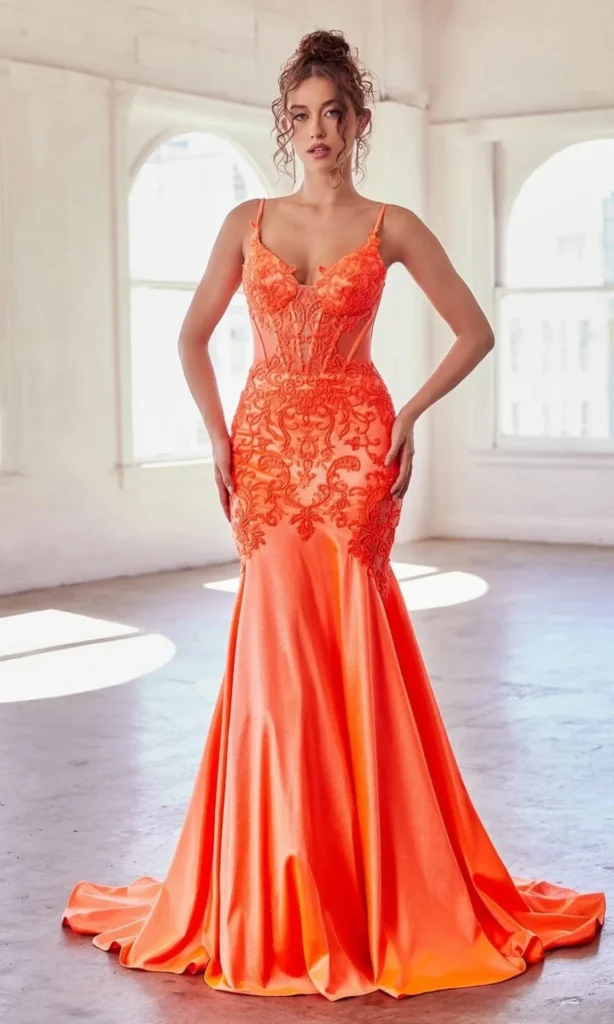
Understanding body shape is essential when selecting from Top Fabrics for Orange Prom Dresses, as different materials interact with proportions in unique ways.
For hourglass body types, satin and crepe are highly effective because they emphasize natural waist definition while maintaining balanced proportions. These fabrics enhance curves without adding unnecessary volume, making them ideal for mermaid or fitted silhouettes.
For pear-shaped bodies, chiffon and tulle are recommended because they soften lower-body volume while drawing attention upward. A-line silhouettes made with lightweight fabrics help create proportional balance between the upper and lower body.
For apple-shaped bodies, empire waist dresses in chiffon or crepe are ideal. These fabrics create vertical flow and reduce focus on the midsection while maintaining elegance and structure.
For petite body types, lightweight chiffon and minimal-layer tulle are preferred. These fabrics elongate the frame visually and prevent overwhelming proportions. Heavy structured fabrics can reduce visual height in petite silhouettes.
For plus-size body types, crepe and structured satin blends offer support and shape control. These fabrics provide stability while maintaining comfort, especially when combined with internal lining or corset construction.
This body-based approach ensures that fabric selection enhances natural proportions rather than working against them, creating a more refined and confident prom look.
Comfort vs Elegance – Finding the Right Balance
A key principle in Top Fabrics for Orange Prom Dresses is balancing visual elegance with physical comfort. Prom is a long event, often involving extended standing, dancing, and photography sessions, which means fabric performance must support endurance.
Comfort-focused fabrics such as chiffon and lightweight blends prioritize breathability and ease of movement. These materials reduce heat retention and allow natural airflow, making them suitable for energetic environments.
Elegance-focused fabrics such as satin and structured crepe prioritize visual impact and silhouette definition. They create a more polished and formal appearance but may feel heavier during extended wear.
The ideal solution often lies in hybrid construction. Designers frequently combine structured bodices with flowing skirts to achieve both stability and comfort. For example, a satin top with a chiffon overlay skirt allows both shape control and movement freedom.
Another important consideration is lining. High-quality prom dresses include soft inner linings that improve comfort regardless of outer fabric type. This hidden layer plays a significant role in how the dress feels against the skin throughout the evening.
Ultimately, the best fabric choice is one that aligns with both aesthetic goals and real-life wear conditions.
Styling Impact of Fabric Choice
Fabric selection in Top Fabrics for Orange Prom Dresses also influences styling decisions, including accessories, footwear, and makeup coordination.
Satin dresses pair well with minimal but luxurious accessories such as metallic jewelry or crystal accents. Because satin already has a reflective surface, styling should enhance rather than compete with its shine.
Chiffon dresses work well with soft, natural styling approaches. Delicate jewelry, neutral makeup tones, and lightweight footwear complement the airy nature of chiffon designs.
Tulle dresses often require balanced styling due to their volume. Simple accessories and structured hairstyles help maintain visual harmony without overwhelming the silhouette.
Crepe dresses support modern minimalist styling. Clean accessories, geometric jewelry, and sleek hairstyles enhance the contemporary aesthetic of crepe-based designs.
Lace dresses naturally introduce texture, so styling should remain subtle to avoid visual overload. Neutral tones and soft makeup palettes are typically preferred.
Understanding fabric-styling interaction ensures that the entire prom look feels cohesive and intentional.
Care Tips for Orange Prom Dress Fabrics
Proper care is essential to preserve the quality of dresses made from Top Fabrics for Orange Prom Dresses. Each fabric requires different handling methods to maintain texture, color, and structure.
Satin should be stored carefully to avoid creasing and should be steamed rather than ironed to preserve its glossy surface. Excess heat can damage its reflective finish.
Chiffon requires gentle handling, preferably hand washing or professional cleaning. It should be stored hanging or flat to avoid distortion of its delicate structure.
Tulle should be stored in breathable garment bags to prevent flattening. Excess pressure can permanently affect its volume and shape.
Crepe is relatively low maintenance but should still be stored properly to maintain its smooth texture. It resists wrinkles better than most fabrics but benefits from gentle steaming.
Lace requires careful handling to avoid snagging. It should be protected during storage and cleaned with gentle methods to preserve detailing.
Proper fabric care ensures long-term durability and maintains the original elegance of the dress.
Discover Premium Orange Prom Dresses at EmberGlow
Finding the right retailer is just as important as choosing the perfect fabric or silhouette. A well-made gown should combine beautiful design, quality construction, and comfortable wearability. EmberGlow focuses on carefully curated orange prom dresses designed to deliver elegant structure, flattering fits, and refined formalwear styling.
EmberGlow offers a wide selection of styles, including sleek satin gowns, romantic chiffon dresses, sequined statement looks, and modern structured silhouettes. This variety allows shoppers to find orange prom dresses that match different body types, aesthetics, and prom themes while maintaining a polished formal appearance.
Quality fabric selection remains a major priority throughout the collection. Detailed product descriptions help customers better understand fabric texture, lining, fit, and overall dress construction, making online shopping feel more reliable and transparent.
Beyond dresses, EmberGlow also provides styling inspiration for accessories, shoes, jewelry, and handbags to help create fully coordinated prom looks. The goal is to make every orange prom dress feel elegant, comfortable, and visually cohesive from head to toe.
Conclusion
The complete understanding of Top Fabrics for Orange Prom Dresses reveals that fabric is not only a visual component but a functional foundation of prom fashion. Satin delivers structure and luxury, chiffon provides movement and comfort, tulle adds dramatic volume, crepe offers modern elegance, and lace enhances texture and detail.
When these materials are aligned correctly with body type, styling approach, and comfort needs, they create a balanced and confident prom experience. Orange prom dresses, due to their high visual impact, require even more attention to fabric behavior to ensure harmony across movement, lighting, and photography.
EmberGlow encourages a thoughtful approach to fabric selection, where every decision is guided by both aesthetic intention and real-world wear performance. To explore curated orange prom dresses designed with premium fabric selection and expert construction standards, visit the EmberGlow collection and discover styles that combine comfort, elegance, and confidence in every detail.