Choosing an orange prom dress is often seen as a bold and confident fashion decision, but it also introduces a higher level of styling sensitivity compared to neutral-toned gowns. The keyword Avoid These Common Orange Prom Dress Fit Mistakes is not just about avoiding errors in sizing, but about understanding how fabric, silhouette, and body proportion interact under real prom conditions such as movement, lighting, and photography.
Orange is a highly expressive color in formalwear. It amplifies structure, enhances curves, and increases visual attention on every seam and contour of the dress. This means that even minor fit issues become visible instantly. A dress that is slightly too tight can appear restrictive under flash photography, while a loose silhouette can lose its intended shape entirely. Unlike darker tones that conceal imperfections, orange highlights them.
EmberGlow approaches prom styling through a fashion engineering lens, focusing on how garments behave on different body types in real-world environments. Instead of treating fit as a simple size selection process, this guide analyzes the most common mistakes that affect orange prom dresses and explains how these issues can be understood from a professional styling perspective. This is not only about avoiding poor choices, but about developing a deeper awareness of how dress construction influences confidence, movement, and visual harmony.
Why Fit Matters More in Orange Prom Dresses
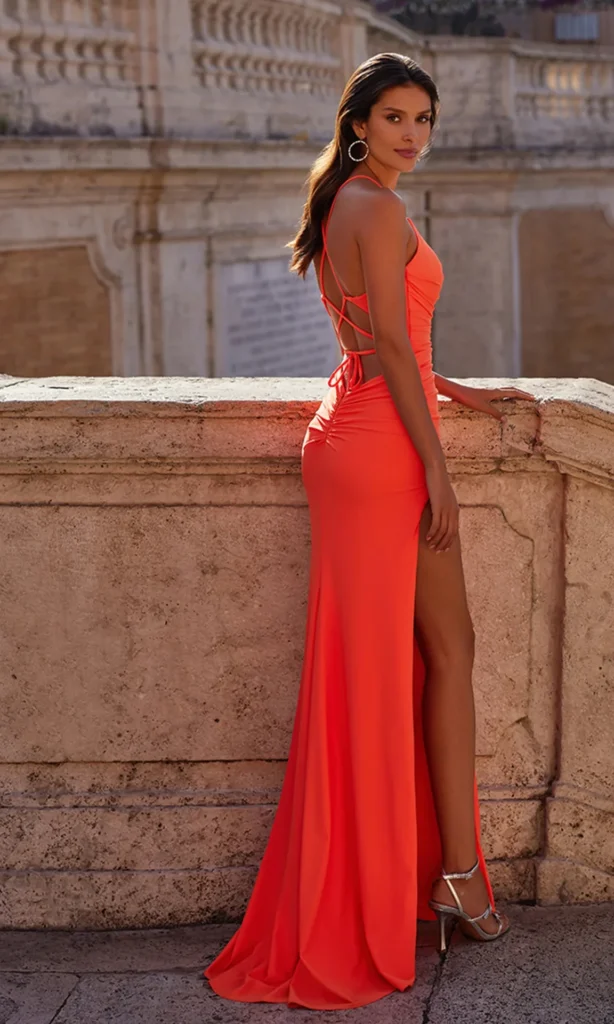
Fit plays a critical role in all formalwear, but it becomes significantly more important in orange prom dresses due to the way the color interacts with light and silhouette definition. In Avoid These Common Orange Prom Dress Fit Mistakes, fit is not simply about whether a dress can be zipped up or not, but how the garment communicates proportion and balance visually.
Orange is a high-intensity color that reflects light strongly. Under prom lighting, stage photography, or indoor flash, it naturally draws attention to structure lines such as seams, darts, waist transitions, and fabric folds. This means that any inconsistency in fit becomes more noticeable compared to darker or muted shades.
From a fashion design perspective, fit determines three essential visual outcomes:
First is proportion balance. A well-fitted dress aligns upper and lower body ratios, creating harmony. A poorly fitted dress disrupts this alignment, making certain areas appear heavier or disproportionate.
Second is silhouette flow. This refers to how the dress transitions from one body section to another. Smooth transitions create elegance, while abrupt or tight transitions create visual tension.
Third is movement behavior. Prom is not a static environment. Walking, dancing, sitting, and posing all influence how a dress behaves. A poorly fitted dress may shift out of place or create pulling tension, which affects both comfort and appearance.
Fabric interaction further complicates this. Satin enhances structure visibility, chiffon softens transitions, and crepe stabilizes shape. When fabric choice and fit are misaligned, even a correct size can appear visually incorrect.
Understanding fit in orange prom dresses therefore requires a combination of technical measurement awareness, body proportion analysis, and fabric behavior understanding.
Choosing the Wrong Size: The Most Common Fit Mistake
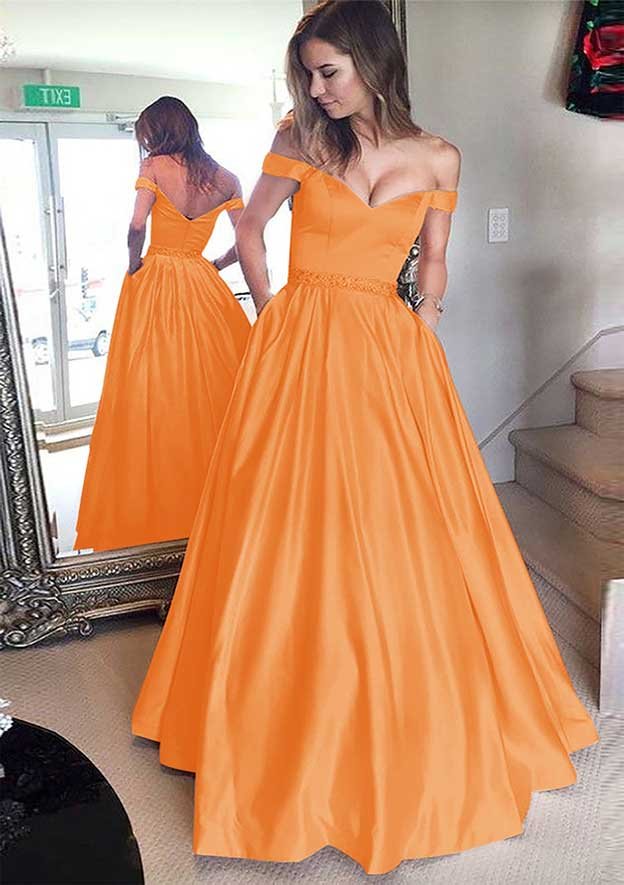
One of the most frequent issues in prom styling is selecting the wrong size, and in Avoid These Common Orange Prom Dress Fit Mistakes, this is considered the foundational error that triggers most other problems.
A dress that is too tight can compress natural curves, restrict movement, and create visible stress lines in areas such as the bust, hips, or waist. This is especially noticeable in satin or structured fabrics, where tension is reflected through shine and fabric distortion. A tight dress may also affect posture, making the wearer appear uncomfortable even in photographs.
On the other hand, a dress that is too loose creates an entirely different issue. Instead of enhancing shape, it hides it. The waist loses definition, the bodice may shift, and the skirt may appear unstructured or heavy. In prom photography, this often results in a silhouette that lacks clarity or visual focus.
Sizing errors frequently occur in online shopping environments where buyers rely on generic size charts instead of body measurements. However, prom dress sizing is not standardized across brands. A size medium in one label may fit like a small or large in another depending on construction design.
Professional stylists emphasize measurement-based selection rather than label-based selection. Bust, waist, and hip measurements provide a more accurate foundation for fit prediction. Even then, minor alterations are often required to achieve a perfect fit, especially in structured gowns.
Another overlooked issue is how size interacts with fabric elasticity. Stretch fabrics offer more flexibility in sizing, while rigid materials such as taffeta or structured satin require more precise fitting. Ignoring this relationship often leads to discomfort or visual imbalance.
In essence, choosing the wrong size is not just a numerical mistake but a structural imbalance that affects the entire dress performance.
Ignoring Body Shape When Selecting Your Dress
Body shape awareness is one of the most essential principles in formalwear styling, yet it is often overlooked. In Avoid These Common Orange Prom Dress Fit Mistakes, ignoring body shape is considered a major cause of silhouette distortion.
Each body shape has a natural structural identity. Hourglass shapes are balanced between bust and hips with a defined waist. Apple shapes carry more volume in the midsection with slimmer limbs. Pear shapes emphasize lower-body volume with a narrower upper frame. These differences are not limitations but design frameworks that help guide silhouette selection.
When a dress does not align with body shape, visual imbalance occurs. For example, an apple body shape wearing a tightly structured waist dress may experience unnecessary emphasis on the midsection, disrupting proportion flow. A pear body shape wearing a straight-cut dress without upper-body detailing may appear bottom-heavy. An hourglass shape placed in a loose silhouette may lose natural waist definition entirely.
Silhouette engineering plays a crucial role in correcting these imbalances. A-line dresses distribute volume evenly and provide universal balance. Mermaid silhouettes emphasize curves but require proportion control. Empire waist designs shift focus upward and create elongation effects.
Orange as a color intensifies these effects because it visually highlights structure lines and movement transitions. This is why body shape awareness becomes even more important when working with orange prom dresses compared to neutral tones.
From a fashion expertise standpoint, the goal is not to change the body but to align the garment with its natural proportions. This creates a visually harmonious result that enhances confidence and aesthetic coherence.
Overlooking Bust Support and Structural Design
Bust support is one of the most underestimated elements in prom dress construction. In Avoid These Common Orange Prom Dress Fit Mistakes, lack of structural support is identified as a key functional failure that affects both comfort and appearance.
Many prom dresses prioritize visual design over internal engineering. Strapless gowns, lightweight bodices, or minimally structured tops may appear elegant but often lack the internal reinforcement required for long wear.
Without proper support systems such as boning, corsetry, or reinforced lining, dresses may shift during movement. This can lead to constant adjustment, discomfort, or visual instability in photographs.
For larger bust proportions, lack of support can result in posture strain and uneven silhouette distribution. For smaller bust proportions, insufficient structure can lead to loss of definition, making the upper body appear flat or undefined.
From a garment construction perspective, bust support is not optional. It is a core structural component that determines how the entire dress sits on the body. A stable bodice allows the rest of the silhouette to function correctly, ensuring that the skirt and waist flow naturally.
Fabric choice also influences support capability. Satin and structured crepe offer better stability due to their density, while chiffon and tulle require internal reinforcement to maintain shape integrity.
Ignoring bust support is not just a comfort issue. It directly affects silhouette performance, visual balance, and overall confidence during wear.
Choosing the Wrong Fabric for Fit and Movement
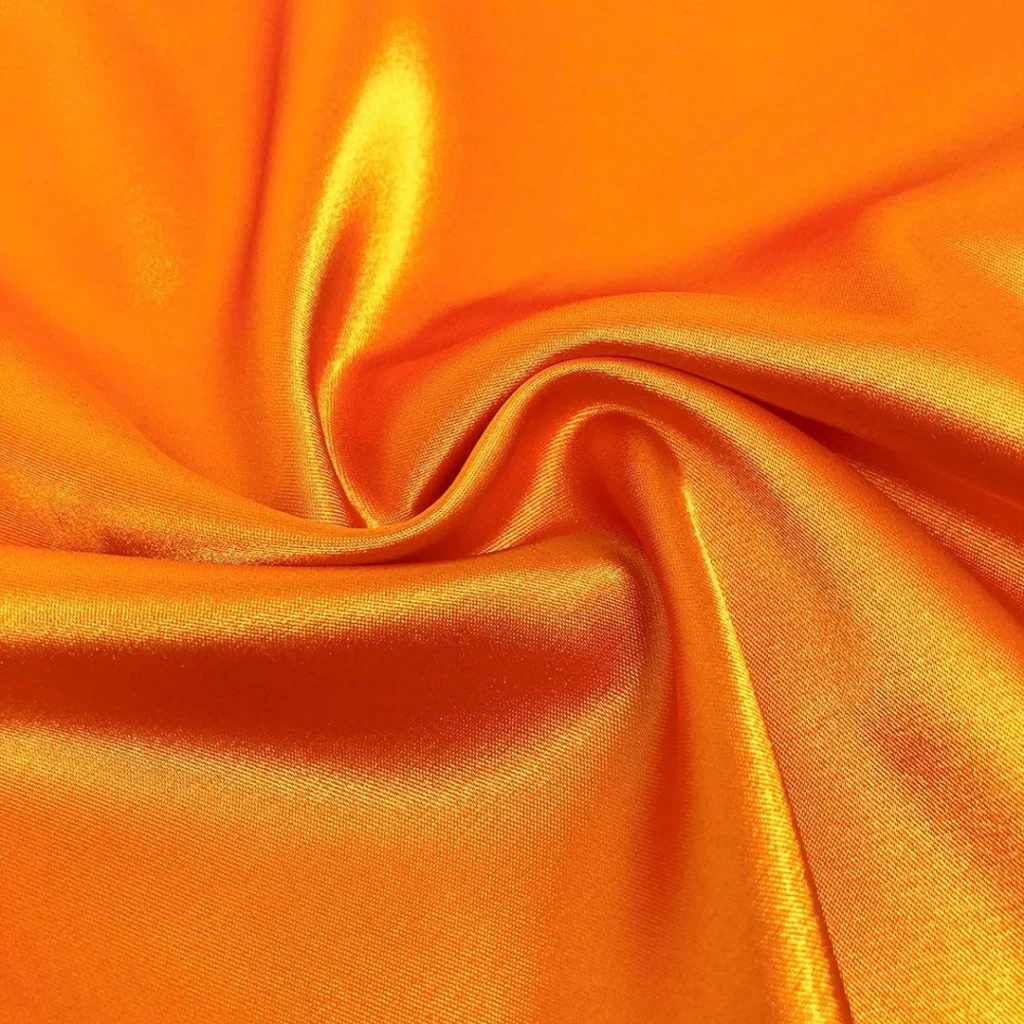
Fabric selection is one of the most underestimated factors in prom dress performance. In Avoid These Common Orange Prom Dress Fit Mistakes, fabric-related errors often cause visual imbalance even when sizing and silhouette are correct.
Each fabric behaves differently under movement and lighting. Satin, for example, has a structured reflective surface that enhances curves and creates a luxurious finish. However, it also reveals tension points easily, meaning poor fit becomes visible immediately through pulling or creasing.
Chiffon, in contrast, is lightweight and fluid. It creates soft movement and is ideal for elongation effects. However, without proper layering or structure, chiffon can lose definition, making the silhouette appear too relaxed or undefined.
Tulle adds volume and dramatic texture, but excessive layering can create unnecessary bulk, especially in lower-body-heavy designs. Crepe offers a balanced structure with controlled drape, making it one of the most reliable fabrics for maintaining consistent shape throughout the night.
Another important consideration is temperature and comfort. Prom events often involve long hours of movement, dancing, and indoor lighting conditions. Fabrics that do not allow airflow can lead to discomfort, which indirectly affects posture and confidence.
Fabric mismatch occurs when the material does not support the intended silhouette. For example, using heavy satin in a design meant for soft flow or using lightweight chiffon in a structured mermaid gown. These mismatches result in silhouette distortion, even if the dress is correctly sized.
Understanding fabric behavior is therefore essential for achieving both comfort and visual precision.
Ignoring Dress Length and Alteration Needs
Dress length is another critical factor that significantly influences fit perception. In Avoid These Common Orange Prom Dress Fit Mistakes, hemline errors are often responsible for disrupted silhouette balance and practical discomfort.
A dress that is too long creates movement issues, especially during walking or dancing. It can cause the wearer to lift the dress repeatedly, which breaks visual flow and reduces elegance. It also increases the risk of tripping, particularly in layered gowns or structured fabrics.
A dress that is too short creates a different problem. Instead of maintaining formal elegance, it can appear unfinished or misaligned with prom dress expectations. This is especially noticeable in ball gowns or A-line silhouettes where length is part of the design identity.
Alteration awareness is essential because most prom dresses are not custom-fitted at the point of purchase. Small adjustments to hemline, waist, or bust area are often necessary to achieve a polished result.
Professional stylists always consider heel height during fitting. A dress should be measured with the actual shoes intended for prom night, as even a small height difference can affect hemline alignment.
Ignoring alteration needs often leads to last-minute fixes or compromised styling outcomes. Proper planning ensures that the dress maintains proportional accuracy in both standing and movement positions.
Styling Mistakes That Affect Fit Perception
Even when a dress is well-fitted, styling errors can distort its visual balance. In Avoid These Common Orange Prom Dress Fit Mistakes, styling is considered a continuation of fit rather than a separate element.
Accessories that are too large or visually heavy can overpower the dress, disrupting proportion harmony. This is especially relevant in orange prom dresses, where color intensity already dominates visual attention. Over-accessorizing creates competition between dress and styling elements, reducing overall elegance.
Footwear also plays a structural role in fit perception. High heels change posture alignment, which directly affects how the dress falls on the body. Incorrect shoe choice can shorten or elongate silhouette perception in unintended ways.
Hairstyle selection influences upper-body balance. For example, heavy hairstyles combined with detailed bodices may create visual overcrowding, while overly minimal hairstyles may fail to balance embellished dresses.
Layering mistakes also occur when additional garments such as shawls, jackets, or wraps interfere with silhouette flow. These elements can disrupt the intended structure of the dress and create uneven visual weight distribution.
Styling should always support the dress structure, not compete with it. The goal is visual harmony where all elements work together to enhance proportion.
How to Ensure a Perfect Orange Prom Dress Fit
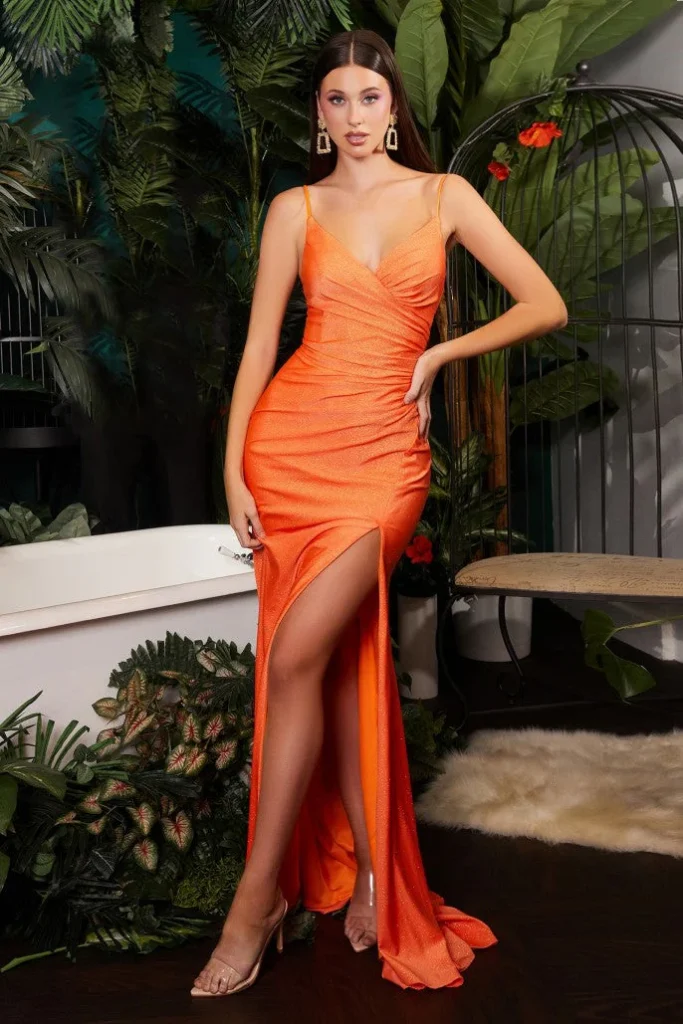
Achieving a perfect fit requires a structured approach rather than guesswork. In Avoid These Common Orange Prom Dress Fit Mistakes, the solution phase focuses on preparation, awareness, and adjustment strategies.
Accurate body measurement is the foundation of proper fit selection. Bust, waist, and hip measurements should always be taken carefully and compared with brand-specific sizing charts. This reduces the risk of mismatch during online purchase.
Try-on evaluation is equally important. A dress should be tested in real movement conditions such as walking, sitting, and raising arms. This helps identify tension points or loose areas that are not visible in static fitting.
Fabric compatibility with body shape must also be considered. Structured fabrics require precise fitting, while flowy materials allow more flexibility but may need layering control.
Alteration planning is often the final step in achieving perfection. Small adjustments to straps, waistlines, or hems can significantly improve silhouette clarity. Professional tailoring ensures that the dress aligns with body proportions instead of forcing the body to adapt to the garment.
A well-fitted dress should feel secure, balanced, and natural without requiring constant adjustment during wear.
EmberGlow Orange Prom Dress Collection
The EmberGlow collection is designed with a focus on fit engineering and body shape compatibility. Each orange prom dress is developed with attention to silhouette structure, fabric behavior, and real movement performance to minimize common fit mistakes.
Instead of treating dresses as generic fashion pieces, EmberGlow designs them as proportional systems. Hourglass-friendly styles emphasize waist definition, apple-friendly designs focus on elongation and vertical balance, and pear-friendly silhouettes prioritize upper-body enhancement.
The goal of the collection is to reduce styling uncertainty by integrating principles from Avoid These Common Orange Prom Dress Fit Mistakes directly into design construction. This ensures that each dress supports natural body structure rather than conflicting with it.
By focusing on fit-first design logic, the collection allows wearers to experience both visual elegance and physical comfort throughout prom night.
Conclusion
Understanding and avoiding fit mistakes is essential for achieving a polished and confident prom look. Through the full analysis of Avoid These Common Orange Prom Dress Fit Mistakes, it becomes clear that successful styling depends on more than appearance. It requires technical awareness of sizing, body shape, fabric behavior, styling balance, and alteration precision.
Orange prom dresses are visually powerful, but this also means they are less forgiving of structural errors. When fit is correctly managed, the result is a harmonious combination of elegance, comfort, and confidence.
EmberGlow encourages a thoughtful approach to prom styling where every decision is intentional and based on real fashion principles rather than surface trends. By understanding these advanced fit considerations, every dress can be transformed into a perfectly balanced expression of personal style.
To explore orange prom dresses designed with precise fit engineering and body-aware construction, visit the EmberGlow collection and discover styles created to eliminate common fit mistakes while enhancing natural beauty.