Finding the right balance when mixing fabrics in orange prom dresses can completely change how a gown looks and feels. Many dresses appear visually attractive online but lack depth, movement, or elegance in person because the fabric combination is poorly executed. Since orange is a bold and highly visible color, texture differences become much more noticeable under lighting. A dress that combines satin, lace, or chiffon incorrectly can quickly feel overwhelming or cheap instead of refined and luxurious.
In this guide, EmberGlow explores how mixing fabrics in orange prom dresses creates more dimension, softness, and sophistication when done correctly. This article explains how satin adds structure, how lace creates romantic texture, how chiffon improves movement, and how balanced fabric combinations help transform a simple gown into a polished formal look with stronger visual impact.
Why Fabric Mixing Matters in Orange Prom Dresses
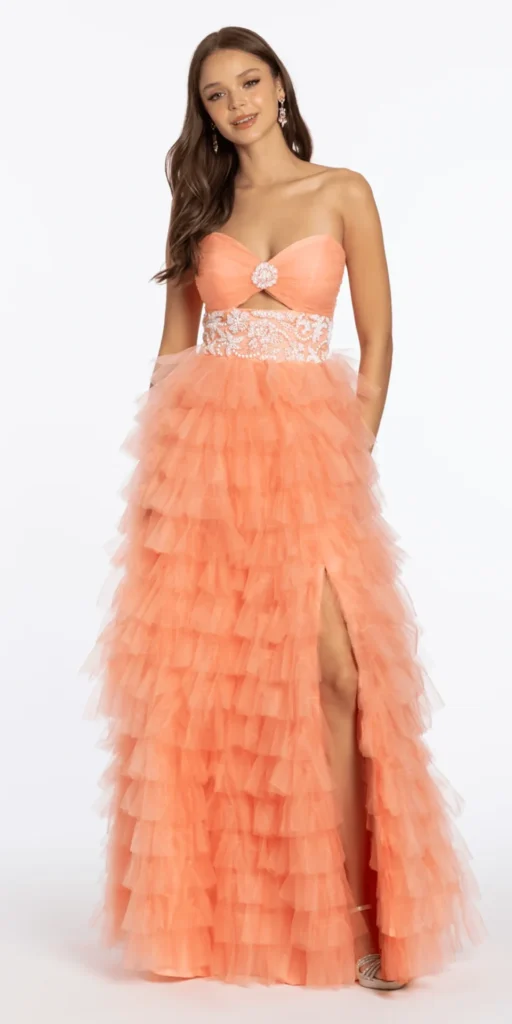
Fabric is one of the most important elements in formalwear design, yet many shoppers focus only on silhouette or color. In reality, the way fabrics interact with each other often determines whether an orange prom dress looks elegant and high-end or flat and overly simple.
One reason why orange prom dress fabrics require careful consideration is because orange naturally reflects light strongly. Unlike darker colors that absorb texture differences more subtly, orange highlights:
- Fabric shine
- Surface texture
- Construction details
- Layering depth
- Movement and drape
This means fabric combinations become much more visible in an orange gown than in many other prom colors.
A single-fabric dress can sometimes feel visually limited, especially if the material lacks contrast or dimension. For example, a fully satin gown may appear elegant initially, but without texture variation, the dress can feel too reflective or one-dimensional under strong lighting.
This is why professional formalwear designers often combine multiple materials to create:
- Better visual balance
- Softer transitions
- More dynamic movement
- Greater depth and structure
The most successful mixed fabric prom dress designs usually combine fabrics that serve different purposes.
For example:
- Satin creates shine and structure
- Chiffon softens movement
- Lace adds detail and texture
When these materials work together properly, the dress feels more luxurious and intentional.
Another important factor is emotional perception. Texture affects how people visually interpret quality. A gown with thoughtful layering and fabric contrast often appears more expensive because it creates richer visual complexity.
This is especially important for formalwear photography. Dresses with layered textures tend to photograph better because they create dimension under both natural light and flash photography.
From an E-E-A-T perspective, experienced shoppers and stylists understand that dress texture contrast plays a major role in achieving a sophisticated prom look. A balanced combination of structure and softness usually creates the most flattering results.
However, balance is critical. Too many competing textures can make a gown feel chaotic instead of refined. This is why successful fabric mixing focuses on harmony rather than excess.
The strongest luxurious prom look often comes from thoughtful restraint:
- One dominant fabric
- One supporting texture
- Controlled embellishment
- Cohesive movement throughout the silhouette
Understanding these principles helps shoppers recognize the difference between intentional craftsmanship and overdesigned dresses that rely on excessive decoration instead of quality design.
How Satin Adds Structure and Shine to Orange Prom Dresses
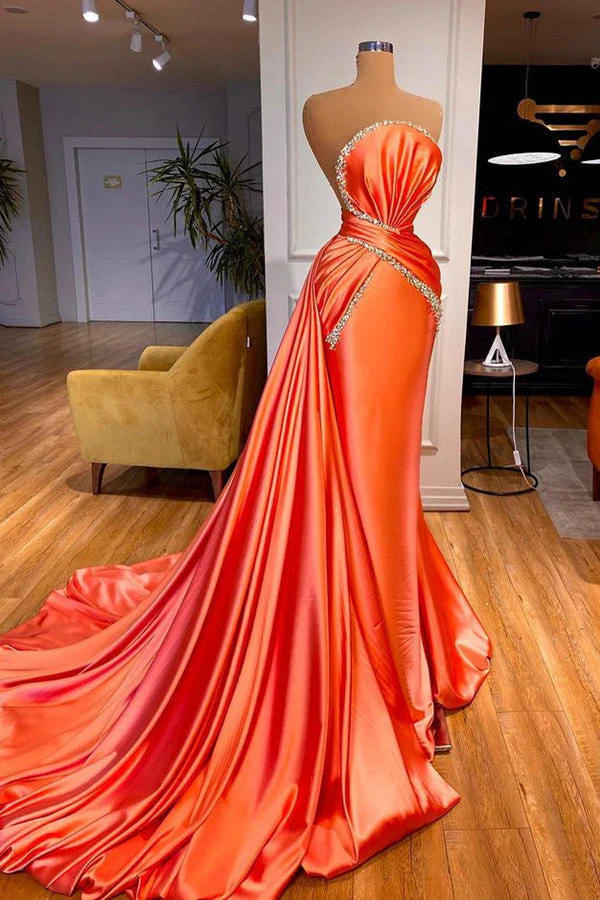
Among all orange prom dress fabrics, satin remains one of the most popular because it enhances warm tones beautifully. Satin naturally reflects light, which helps orange shades appear richer, deeper, and more visually dramatic during formal events.
A high-quality satin prom dress creates elegance through smoothness and structure. Unlike softer fabrics that move freely, satin gives a gown more shape and visual definition. This is why satin is commonly used in:
- Fitted gowns
- Structured bodices
- Mermaid silhouettes
- Corset designs
Why Satin Works So Well With Orange
Orange already carries visual energy, and satin amplifies that effect through reflection. When high-quality satin is used properly, it creates:
- Luxurious shine
- Rich color depth
- Smooth body contouring
- Sophisticated evening appearance
This is especially effective in a orange mermaid prom dress, where the fabric follows the body closely before expanding near the hemline.
Premium satin also helps formalwear appear more polished because it holds shape better than many lightweight materials. This structure becomes important in dresses requiring:
- Defined waistlines
- Sculpted silhouettes
- Corset support
- Clean seam placement
Common Satin Mistakes in Formalwear
Although satin can look luxurious, poor-quality satin often creates the opposite effect.
Low-quality satin usually:
- Reflects light too harshly
- Appears plastic-like
- Wrinkles excessively
- Clings awkwardly to the body
This is why fabric quality matters significantly in a satin prom dress.
Another common issue is using too much satin without balancing the visual weight. Since satin already attracts attention, pairing it with additional heavy embellishments can overwhelm the design.
Professional stylists often soften satin using:
- Chiffon overlays
- Lace bodice details
- Matte texture contrasts
This creates a more balanced and wearable look.
Satin and Dress Structure
One of satin’s greatest strengths is its ability to support shape. This is why satin works exceptionally well in:
- orange corset prom dress designs
- Structured A-line gowns
- Sculpted evening silhouettes
The fabric maintains clean lines while still appearing elegant under movement.
However, construction quality matters just as much as the fabric itself. High-quality satin should drape smoothly without visible pulling around seams or zippers.
Experienced shoppers usually examine:
- Seam consistency
- Reflection balance
- Wrinkle behavior
- Fabric thickness
These details help determine whether the gown uses true luxury satin fabric or lower-quality imitation satin.
Using Lace to Add Detail and Romantic Texture
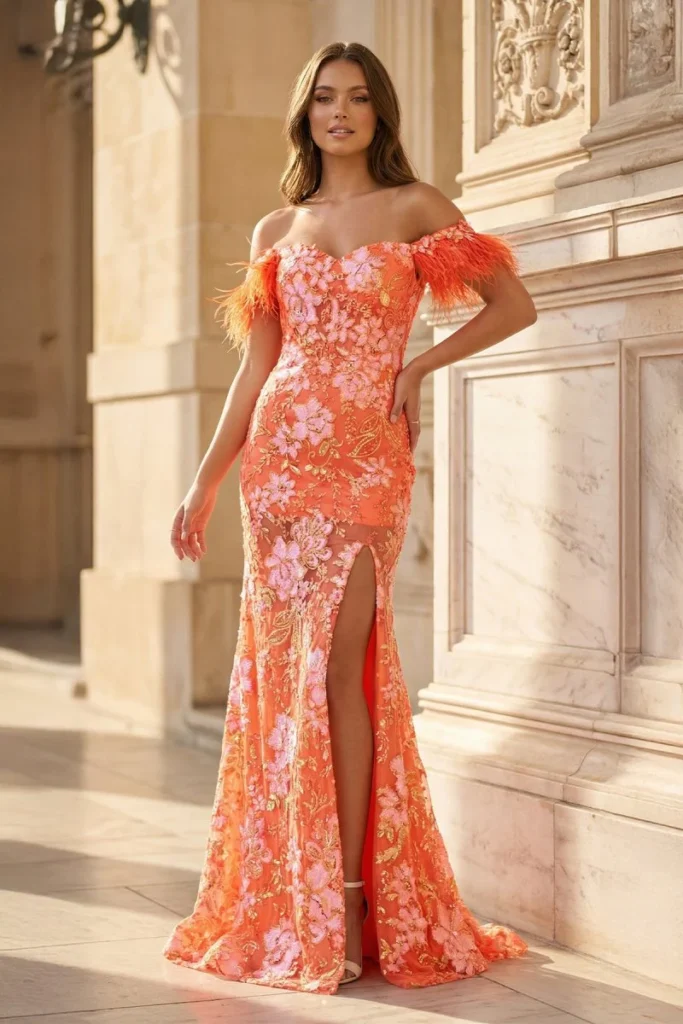
Lace plays a completely different role from satin in formalwear design. While satin creates structure and shine, lace introduces softness, delicacy, and visual intricacy. When used properly, lace can transform an orange prom dress into something far more dimensional and elegant.
One reason lace works so effectively in formalwear is because it breaks up large sections of solid color. Since orange is naturally bold, lace helps soften the intensity by adding texture and visual breathing space.
This is why many designers incorporate lace into:
- Bodices
- Sleeves
- Back panels
- Corset overlays
- Waist detailing
How Lace Softens Bold Orange Tones
Orange is energetic and vibrant, but too much uninterrupted color can sometimes feel visually overpowering. Lace introduces contrast without reducing the richness of the dress itself.
A well-designed lace prom dress often feels:
- More romantic
- More refined
- More detailed
- More visually layered
This is especially important for shoppers who want a softer or more feminine formal aesthetic.
Lace also creates beautiful texture under lighting. Unlike satin, which reflects light directly, lace diffuses light across its pattern, creating subtle dimension.
Strategic Lace Placement Matters
Professional dress construction rarely places lace randomly. The best gowns use lace strategically to guide visual attention.
Common placements include:
- Lace bodices to frame the upper body
- Sleeve details for elegance
- Open-back lace panels for softness
- Corset overlays for texture contrast
In a orange corset prom dress, lace can soften the structured appearance of the bodice while maintaining shape and support.
Avoiding Overly Busy Fabric Combinations
One of the biggest mistakes in mixing fabrics in orange prom dresses is overcomplicating the design. Lace already contains intricate detail, so combining it with excessive embellishments can make the gown feel visually crowded.
To maintain balance:
- Keep lace placement intentional
- Avoid combining too many competing textures
- Let one fabric remain dominant
The strongest luxury dress details usually feel cohesive rather than excessive.
Another sign of quality is how seamlessly the lace integrates with the surrounding fabric. Poorly attached lace often creates uneven edges or awkward transitions that reduce the overall elegance of the gown.
High-quality construction should make the fabric combination feel natural and fluid rather than forced.
Why Chiffon Creates Movement and Softness
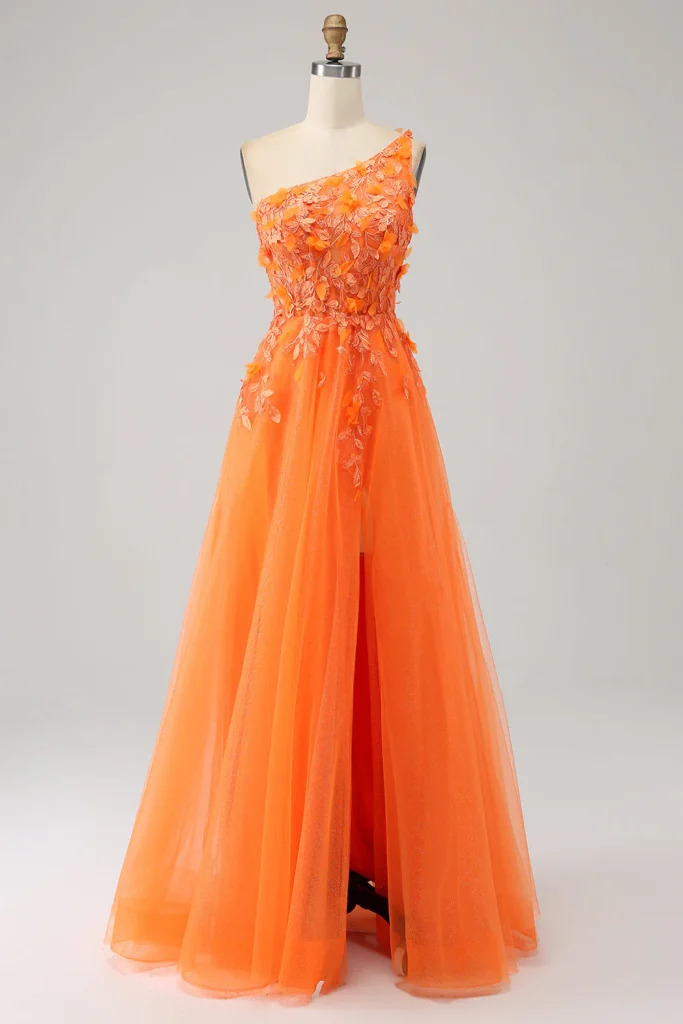
Among the most versatile materials used in formalwear, chiffon remains one of the best fabrics for adding softness and graceful movement to an orange prom dress. While satin provides structure and lace adds texture, chiffon introduces fluidity that helps balance heavier elements within the gown.
This balance becomes especially important when mixing fabrics in orange prom dresses because orange naturally attracts visual attention. Without softer fabric contrast, the dress can sometimes feel too bold or visually heavy. Chiffon helps reduce that intensity by creating lighter movement and a more romantic finish.
One reason chiffon works so effectively in formalwear is its airy structure. High-quality chiffon moves naturally with the body rather than appearing stiff or overly controlled. This creates a softer silhouette that feels elegant both in motion and in photography.
A premium chiffon prom dress often creates:
- Lightweight comfort
- Flowing movement
- Layered softness
- Romantic visual texture
- Breathable wearability
This makes chiffon especially popular for:
- Spring prom events
- Warm-weather dances
- Outdoor venues
- Layered formal gowns
Why Chiffon Works Beautifully With Orange
Orange can appear very energetic under strong lighting, especially in highly reflective fabrics like satin. Chiffon softens that effect because its matte and semi-transparent texture diffuses light more gently.
This creates:
- Better visual balance
- More graceful movement
- Softer color transitions
- Enhanced layering depth
In an orange A-line prom dress, chiffon often helps create floating movement around the skirt, making the gown feel lighter and more elegant.
Chiffon also pairs extremely well with satin because the contrast between structure and softness creates a more refined overall look. Satin provides shape while chiffon prevents the gown from feeling overly rigid.
Common Chiffon Mistakes in Formalwear
Although chiffon can look luxurious, low-quality chiffon often causes major visual problems.
Cheap chiffon may:
- Appear overly transparent
- Lose shape quickly
- Wrinkle excessively
- Feel rough against the skin
- Hang flat without movement
Poor layering is another common issue. A gown with weak chiffon layering may look unfinished or uneven under lighting.
Experienced shoppers usually examine:
- Layer consistency
- Hem smoothness
- Fabric flow
- Transparency levels
- Overall movement in product videos or photos
Chiffon and Dress Comfort
Comfort is one of chiffon’s biggest advantages. Heavy formalwear can sometimes become uncomfortable during long events, especially when combined with tight silhouettes or thick fabrics.
Soft chiffon fabric helps improve:
- Breathability
- Ease of movement
- Lightweight wear
- Overall comfort during dancing and walking
This is why chiffon is commonly used to soften more structured gowns like:
- Corset dresses
- Satin mermaid silhouettes
- Layered evening gowns
When used thoughtfully, chiffon creates a much more balanced formalwear experience that feels elegant without becoming restrictive.
How to Balance Multiple Fabrics Without Overcomplicating the Dress
One of the most important skills in formalwear design is understanding how to combine textures without making the dress feel chaotic. Successful fabric combinations for prom dresses rely on balance, restraint, and cohesion rather than excessive detail.
Many dresses fail because they attempt to combine too many ideas at once. Sequins, lace, satin, chiffon, embroidery, glitter, and heavy appliqués can quickly compete for attention instead of supporting each other.
The best mixed fabric prom dress designs usually follow one important principle:
- one dominant fabric
- one supporting texture
This creates visual hierarchy and allows each material to contribute something unique without overwhelming the silhouette.
Satin and Chiffon Balance
One of the most successful combinations in formalwear is satin paired with chiffon.
Why it works:
- Satin provides structure
- Chiffon softens movement
- Reflection and softness balance each other naturally
For example:
- satin bodice + chiffon skirt
- satin corset + chiffon overlay
- fitted satin base + chiffon train
These combinations create dimension while maintaining elegance.
Satin and Lace Combinations
Satin and lace create a more detailed and romantic appearance.
This combination works especially well in:
- formal evening gowns
- fitted silhouettes
- corset bodices
- luxury-inspired prom dresses
The key is moderation. Too much lace on top of highly reflective satin can make the dress feel visually crowded.
Professional designers often use lace selectively on:
- bodices
- sleeves
- waistlines
- back panels
This allows satin to remain the primary visual focus.
Chiffon and Lace Pairing
Chiffon and lace create one of the softest and most romantic combinations in formalwear.
This pairing is especially effective for:
- flowing A-line gowns
- garden-inspired prom looks
- lightweight formalwear
However, both fabrics already contain softness and texture. Without enough structure, the gown can lose definition.
This is why many designers include:
- structured waistlines
- fitted bodices
- internal support systems
to maintain silhouette clarity.
Mistakes That Make Mixed Fabric Dresses Look Cheap
Poor fabric balance often reduces the elegance of the dress.
Common problems include:
- Too many competing textures
- Excessive embellishments
- Uneven layering
- Poor fabric transitions
- Inconsistent construction quality
A dress should feel intentional and cohesive rather than overloaded with decoration.
The strongest balanced dress design often appears effortless because every fabric serves a clear purpose.
What High-Quality Mixed Fabric Prom Dresses Look Like
Understanding how to recognize quality craftsmanship is essential when shopping for high-quality prom dresses online. Beautiful fabric combinations alone do not guarantee elegance if the construction itself is weak.
Premium dresses usually reveal their quality through small details rather than excessive decoration.
Clean Fabric Transitions
One of the clearest signs of quality is how smoothly fabrics connect with each other.
A well-made gown should transition naturally between:
- satin and lace
- chiffon and satin
- layered skirt sections
- corset and overlay fabrics
Poor construction often creates:
- uneven stitching
- awkward seams
- bunching near transitions
- visible attachment lines
These flaws become especially noticeable in bright colors like orange.
Strong Internal Construction
High-quality gowns rely heavily on internal support systems.
This includes:
- lining quality
- reinforced seams
- structured bodices
- hidden support layers
Without strong internal construction, even beautiful fabrics can lose shape quickly during wear.
Fabric Weight and Layering Matter
Professional prom dress craftsmanship also depends on proper fabric balance.
A premium gown should:
- move naturally
- maintain silhouette shape
- avoid collapsing under movement
- feel balanced rather than heavy
Poorly layered dresses often look flat or unfinished under lighting.
Attention to Detail Creates Luxury
Luxury formalwear rarely depends on excessive decoration. Instead, it focuses on:
- precision stitching
- thoughtful layering
- fabric harmony
- clean finishing
This is what separates a true premium gown from fast-fashion imitations.
Experienced shoppers searching for orange prom dress fabrics often prioritize craftsmanship over trend overload because quality details create a much more polished appearance.
Explore Mixed Fabric Orange Prom Dresses at EmberGlow
Finding elegant orange prom dresses becomes much easier when fabric combinations are selected thoughtfully instead of randomly following trends. At EmberGlow, the focus is on creating collections that balance texture, movement, structure, and wearability in a more refined way.
Rather than relying on excessive embellishment, EmberGlow emphasizes carefully curated fabric combinations that help dresses feel sophisticated without becoming visually overwhelming.
The collection includes designs featuring:
- satin and chiffon layering
- lace bodice detailing
- soft flowing skirts
- structured corset silhouettes
- balanced texture contrast
This approach creates gowns that feel both modern and timeless.
One of the biggest priorities at EmberGlow is ensuring that every fabric combination serves a purpose. A satin prom dress should create elegant structure, while chiffon introduces movement and softness. Lace details are used to add texture and refinement without overpowering the silhouette.
This attention to balance helps create:
- more wearable formal looks
- softer visual transitions
- elevated dress movement
- polished photography appearance
The collection also includes a wide range of silhouettes such as:
- orange mermaid prom dress
- orange A-line prom dress
- orange corset prom dress
- layered chiffon evening gowns
Because formalwear should feel comfortable as well as elegant, EmberGlow prioritizes dresses that combine:
- lightweight movement
- structured support
- breathable layering
- visually balanced construction
For shoppers looking for high-quality prom dresses, thoughtful fabric mixing often makes the biggest difference between a dress that simply looks trendy and a gown that feels genuinely refined.
Conclusion
Understanding the art of mixing fabrics in orange prom dresses helps shoppers recognize what truly creates elegance in formalwear. Satin, lace, and chiffon each contribute something unique, but the most successful gowns use these materials in balanced and intentional ways.
For shoppers searching for elegant and thoughtfully designed orange prom dresses, EmberGlow offers curated styles that focus on balanced construction, refined fabric combinations, and wearable sophistication. From flowing chiffon layers to structured satin corset silhouettes, the collection is designed to help every prom look feel elevated, confident, and visually unforgettable.